
7 Parenting Tips to Build Healthy Study Habits During Online Schooling
Online schooling is obviously a norm on the rise, and as your child is learning from a screen, they are constantly surrounded by distractions at home: food, doorbell, a sibling, or your cat.
It’s no secret that children are disorganised, prone to distractions, and ever too quick to swap homework for snack time. But is that how study habits develop?
I believe we all know the answer - they are not built in a day, but gradually through consistent routines, daily effort, and encouragement that tells a child, “You’re getting there.”
Online schooling is obviously a norm on the rise, and as your child is learning from a screen; s/he is constantly surrounded by distractions at home: food, doorbell, a sibling, or your cat.
So, how can you help them stay focused without repeating yourself a 100 times or making learning feel like a chore?

77% of academic leaders believe that online education offers learning outcomes equal to or better than traditional classroom learning.
It’s all about guiding them with structure, not stress.
Here are 7 realistic parenting strategies to help your child develop healthy and long-standing study habits, especially in an online setup.
1. A Functional Study Schedule
No need for the 8 AM guilt trip. The best feature of online learning is that it’s flexible. So, you can create a daily study schedule that fits their energy levels. If they’re a morning person, start strong. If they’re a night owl, keep the evening slots productive. The goal is not perfection; it’s consistency.
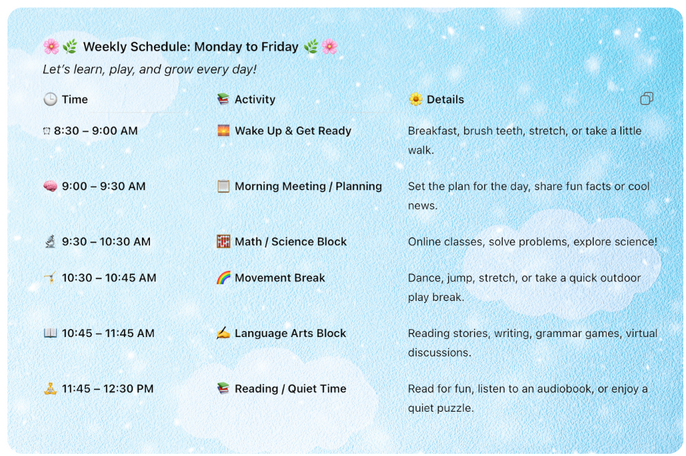
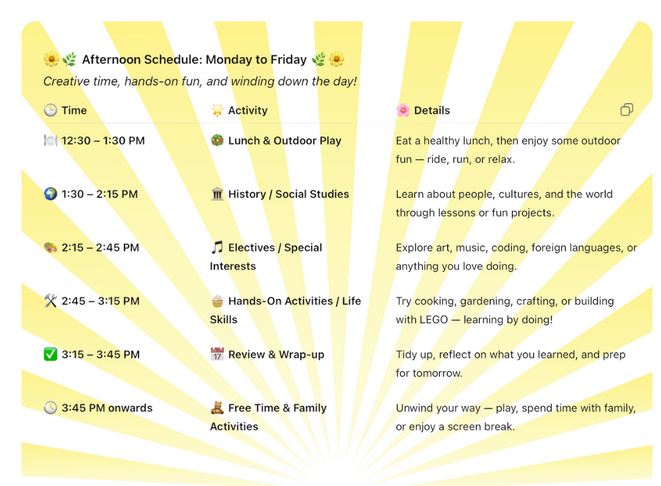
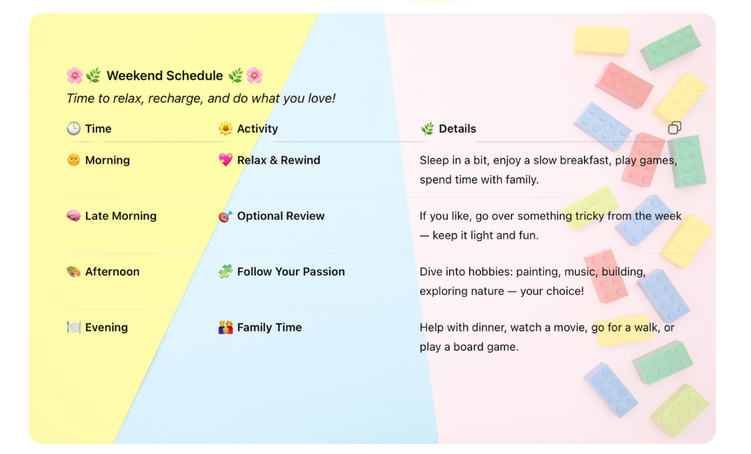
Pro Tip: Anchor their schedule with a few fixed points, such as wake time, lunch, and an evening review.
2. Set Smaller Goals
A long list of assignments can be stressful. Break them down into small, timed goals. Your children will feel empowered after achieving these goals. So, teach your child to “chunk” their workload into 20-40 minute task blocks with clear mini-targets. This will build their momentum and make big projects manageable.

Pro Tip: Celebrate every goal they achieve.
3. Build a "No-Nonsense" Study Zone
Their study space should be focused. Remove all distractions, keep study materials handy, and create a space that feels different from their play or comfort areas. A simple desk, good natural lighting, and headphones – this is all you need.

Pro Tip: Use the same space daily without compromise. Repetition helps create a routine.
4. Active Learning is Important
Encourage your child to take notes, pause to revise, and summarize lessons aloud. Why? Because these things solidify their learning a lot more than passively watching a screen. These habits help your child shift from being simply a viewer to a thinker.
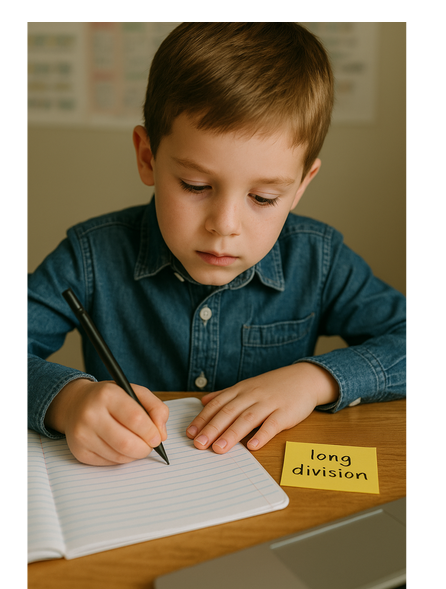
Active learning will also build their critical thinking. How? Because your child isn’t just memorizing, they’re properly engaging with the content. You can ask them to explain a concept to you or teach it back. If they can teach it, it means they’ve understood it. That small shift in role will help boost their memory, confidence, and clarity.
Pro Tip: Digital or handwritten notes work as long as they are thoughtful and consistent.
5. Review Daily for 10 Minutes
A short 10-minute evening review daily — asking them what they learned, what confused them, or what they enjoyed. This helps to solidify their knowledge and identify learning gaps early. Waiting until exam week to revise only increases stress.
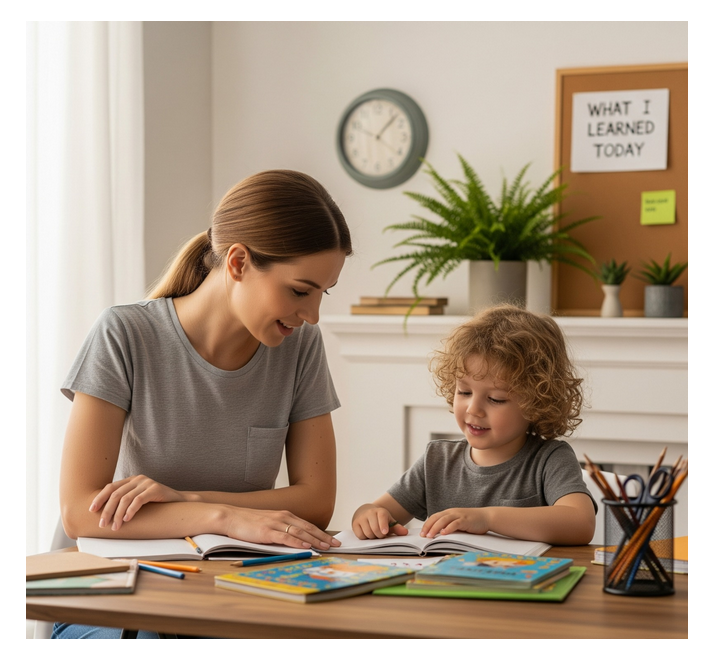
Pro Tip: Ask them, “what is one thing you understood well today and one thing that needs more time?”
6. Let Them See You Focus
If you want your child to put down their phone, let them see you put down yours while working. Your own professional habits shape how seriously your children behave in school. As a parent, whether you’re reading, planning your day, or being calm and intentional, remember that you mostly teach your children without saying a word.
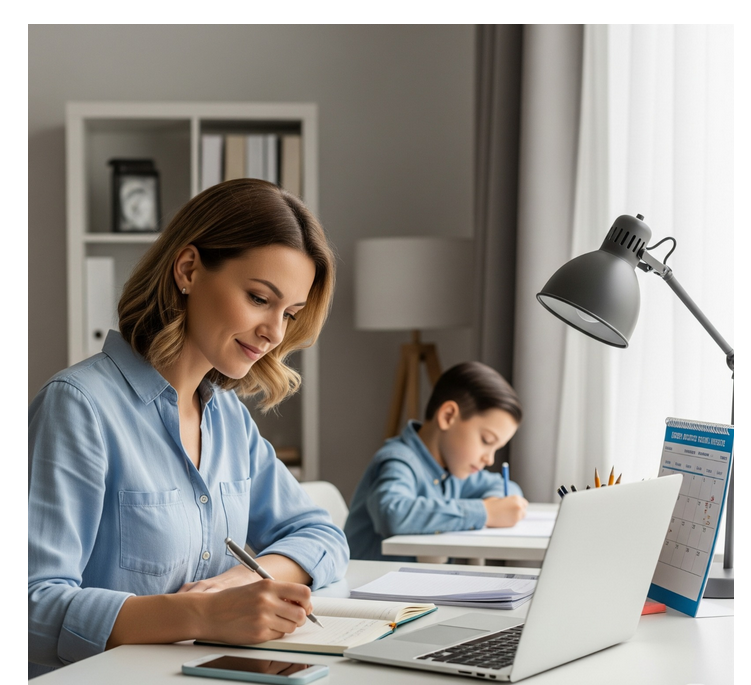
Pro Tip: Kids don’t always listen, but they always watch and learn.
7. Applaud Their Efforts, Not Just Their Grades
Don’t just chase after their good grades; appreciate them every time they make a concerted effort. Why? Because habits are built on these sincere efforts, and not just their results. So, whether they finished early or simply didn’t give up today, acknowledge their efforts. Positive reinforcement isn’t spoiling; it’s a strategy.
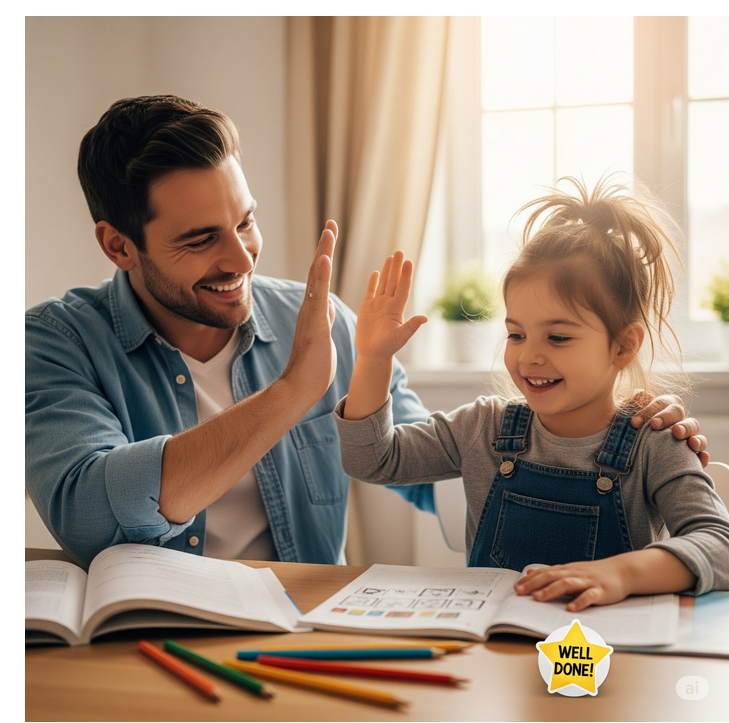
Mind you, it’s easy to miss the small wins. Some moments truly deserve attention, like when your child sits down without being told, completes a task they usually avoid, or even bounces back after getting distracted. The more you notice their effort, the more they’ll believe that their progress matters.
Remember, the goal is to build a mindset that values showing up, trying again, and learning through the process.
Pro Tip: Say “I love how you stuck to your plan today,” and mean it.
In Conclusion:
Good Habits > Good Luck
You never need to push your child to be “disciplined.” You need to help them build their discipline step by step. In the world of online schooling—where freedom is high but distractions are higher—these habits become your child’s best defense.
Also, remember, once formed, healthy study habits won’t just last till their school is over; they will last for their lifetime.
Frequently Asked Questions
Q1. How do I create a study schedule that works for my child?
Use the flexibility offered by online schooling to your advantage and create a schedule that fits you child’s routine. If your child is an early riser, then keep the morning routine strong. If your child is more active during the evening, then shift more workload to the evening.
Just keep a few things fixed — like wake-up time, lunch, and a short evening review — and stay consistent.
Q2. What if my child feels overwhelmed with too much work?
That’s normal. Big assignments can feel like a lot of work. Help them break the work into smaller chunks of 20–40 minutes. It makes things manageable and keeps them motivated along the way.
Q3. My house is full of distractions. What can I do?
You need to set up a distraction-free zone that feels different from where they play or relax. A small desk, good light, and headphones are all you need. It’s important to use the same spot daily because routine builds focus.
Q4. How can I encourage good habits in my child without nagging all the time?
Focus on their effort, not just on the results. Did they try today? Did they stick to their plan? Say it out loud: “I’m proud of how you stayed focused today”. This can go a long way. Effort leads to habits, and habits lead to success.
Q5. Is it necessary to review daily? Even just for 10 minutes?
It helps more than you’d think. A short chat about what they learned — or even what confused them — helps everything stick. Try asking, “What’s one thing you learned today?” It keeps the learning fresh without feeling like another task.
Suggested Read
- 7 Parenting tips for managing screen time during online school
- 7 Parenting Tips to Support Your Child in Online Schooling
- The 4 Types of Parenting Styles: Which One is Right for You?
- Helicopter Parenting: How Does It Impact Kids?
Mira Lew
Aug 03, 2025